Thoughts on a few "lower tox" Toothpastes
*not medical/dental advice - just my personal thoughts
Since learning all I have learned from the research that went into my toothpaste guide with Dr. Jasmine Elmore, there are quite a few toothpastes we currently own that I would NOT recommend. Let's dive into everything ~currently~ on our counter.
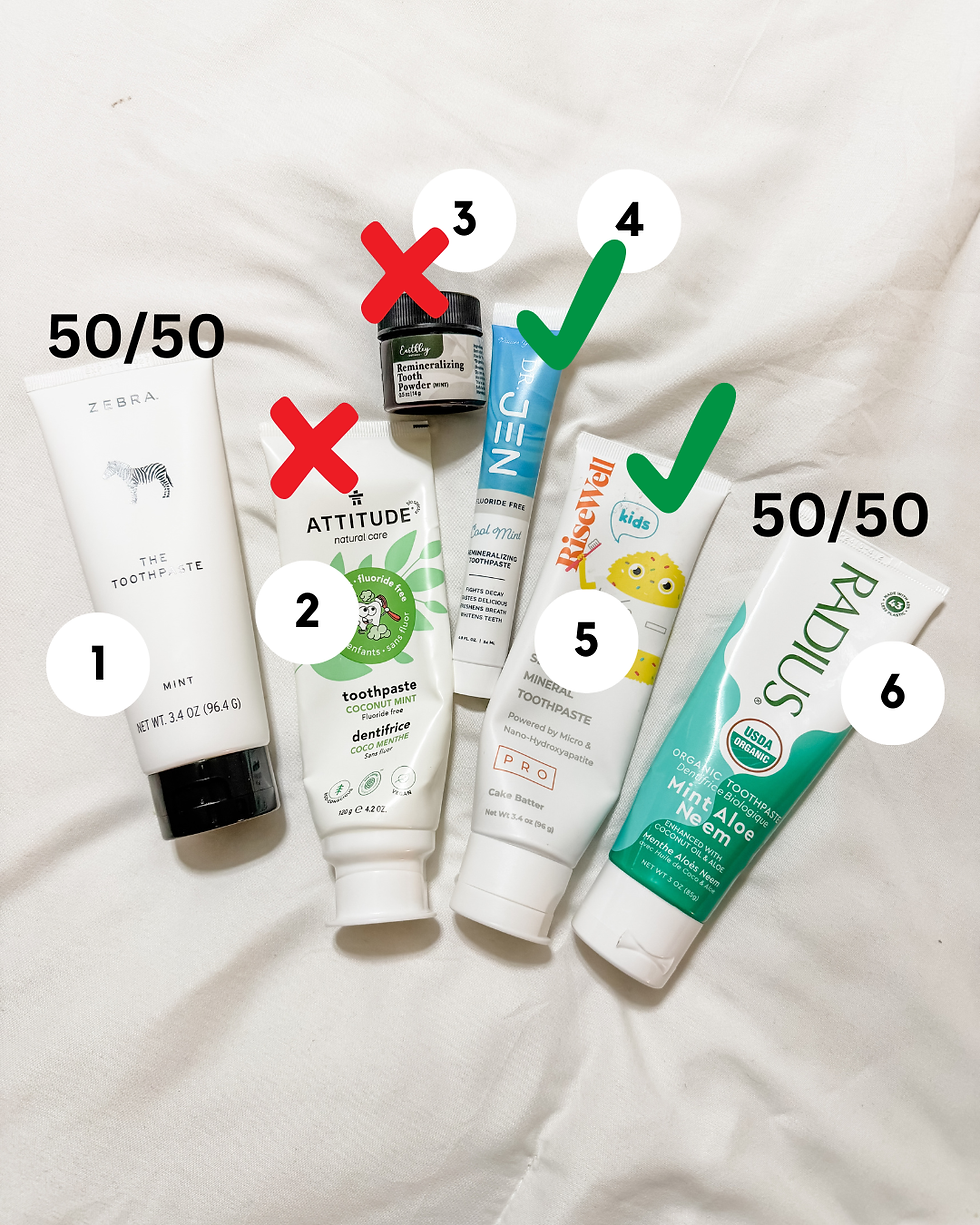
Zebra (code: ALEXK)
Zebra is a xylitol based toothpaste - which I love everything about xylitol, and not just for oral health. Ingredient wise, it's great.
However, it's important to keep in mind that xylitol alone will NOT remineralize. Instead, it helps SUPPORT the remineralization process by creating the ideal conditions for remineralization to happen naturally - reducing acid producing bacteria, raising oral pH, and increasing saliva flow.
If someone is prone to cavities, xylitol alone would not be ideal. If they are wanting to avoid fluoride, the next best option would be nano-hydroxyapatite (nHA). Which...Zebra is very outspoken against nano-hydroxyapatite (nHA), which I don't agree with. BUT for a xylitol-only based toothpaste, they are a great option IMO.
Attitude Fluoride Free
I love everything about Attitude, but their toothpaste is NOT it. It contains sorbitol, which I don't necessarily have a problem with as long as there's also xylitol and/or nHA...but this one only has sorbitol. Unlike xylitol that supports remineralization, sorbitol is used for function (ie keeping toothpaste moist), NOT cavity prevention. So I would not recommend this toothpaste, and DEFINITELY not if you have a cavity prone kid.
Earthley Remineralization Tooth Powder (code: ALEXK10)
Similar to Attitude, I LOVE Earthley. But I hesitate to recommend this tooth powder. While the ingredients do have some antimicrobial benefits, I don't feel like they really supply what's needed for actual enamel rebuilding. True remineralization, especially in an active or weakened spot, requires bioavailable minerals that can integrate into the enamel structure (such as fluoride or nHA).
And I could be wrong, but I just don't feel like bentonite clay, charcoal, cinnamon, clove, and stevia will supply the bioavailable calcium-phosphate in a form that can integrate into enamel. I also feel like tooth powders can be mildly abrasive, which can be counterproductive on already compromised enamel or areas of sensitivity. For maintenance on healthy teeth it may be fine, but when remineralization is the goal, I’d be hesitant to rely on this.
I'm not saying I won't be proven wrong someday, but nano-hydroxyapatite is really where it's at for me at the moment if you're not wanting fluoride. And no, I do not believe the research is there to confidently say it crosses the blood brain barrier like people claim. On the flip side, all the talk that 10% is the only nHA that actually provides any benefit, I don't necessarily agree with either (see my toothpaste guide for more on that). However, if you have active spots you are trying to remineralize (not just maintenance) then personally, if it were me, I would go with Dr. Jen's 10% nHA - it's the only 10% I know of.
Risewell Pro's Nano-Hydroxyapatite (ALEX10)
The above link is the kids nHA. They also have an adults, which I have used. It is a concentration of 5% nHA and 10% micro-HA. I think micro-HA is a bit of an outdated technology, so I don't pay too much attention to that. I am just focused on the 5% nHA, which studies have found that improvements between 2%, 5%, and 10% nHA were pretty similar to one another and no one was statistically "better" than the others.
Radius is erythritol based, which is an up and coming promising ingredient. There is emerging research suggesting it may be just as effective, and in some cases more effective, than xylitol at reducing plaque and supporting cavity prevention. The thought is because of its smaller molecular size it may be able to penetrate biofilm more easily, and it generally has a lower risk of digestive issues if ingested. However, it does appear to stimulate saliva less than xylitol, and it doesn’t have the same depth of long-term research yet.
All in all I would say both are good choices, but as of now xylitol still holds up a litter higher based on the robust research and saliva-stimulating benefits. But erythritol is a very promising alternative! But, again, keep in mind neither promote remineralization on their own.


Comments