AMAZON: Perspectives from Small Businesses
Updated: Apr 10
I’m a crunchy mom who loves small businesses…and still shops on Amazon. I have many friends and family who own small business. I know the work, heart, and passion put behind these businesses. I try, when I can, to support small. But can I just be honest? I love Amazon.
There are days I have felt guilty about this. So I decided to reach out to a few small businesses I know who sell on Amazon to get their perspective.
Here’s what I learned from The Hampton Grocers:

What are the pros and cons?
Selling on Amazon gives brands instant access to high-intent shoppers and built-in demand, making it easier to drive quick sales. It helps simplify operations and opens additional revenue streams beyond a website.
But there are tradeoffs: fees and ad spend cut into margins, visibility is often pay-to-play, and you don’t own the customer relationship, which makes long-term brand loyalty harder to build.
What does selling on Amazon look like for a small business? Once a customer places an order, what happens behind the scenes to get that product to them?
For small businesses, selling on Amazon starts with setting up a seller account, creating listings, and choosing fulfillment. Most use Fulfillment by Amazon (FBA), sending inventory to Amazon’s warehouses so they can handle picking, packing, shipping, customer service, and returns.
The alternative is Fulfilled by Merchant (FBM), where the brand stores and ships orders themselves, like a DTC model. The biggest advantage is speed. If your product isn’t Prime-eligible, you miss a key reason customers shop on Amazon.
When someone orders from Hampton Grocers, the product is already in Amazon’s warehouses. They handle everything from packing to delivery and returns.
Do you feel like Amazon helps your small business, or is it something you have to do to keep up with bigger brands?
“If it weren’t for Lacnola, we likely wouldn’t be on Amazon at all. While the platform isn’t where we build our brand or make our best margins, it serves a very specific purpose for us - speed and accessibility for new moms. Amazon allows us to get Lacnola into their hands quickly during a time when convenience is everything, often faster than we can fulfill orders ourselves. So while it’s not our preferred channel, it’s a necessary one to meet that customer in the moment and stay competitive.”
Is buying from Amazon (even from a small business) legit? Are you getting the same quality as buying directly from their website or in-store?
“Yes - when you’re buying from the brand’s official Amazon storefront, you’re getting the exact same product we make and sell everywhere else. The only difference is the fulfillment experience. Amazon will ship it with other items; we learned this the hard way when we first started selling (we sold single unit), everything arrived smushed. The product itself is identical to what is on our website, but we just pre-kit (pre-pack) it in sets of 2 and 3 in boxes so it does not get damaged. For us, we hold Amazon inventory to the same standards as everything else, so customers can feel confident they’re getting the same quality, just with added convenience and speed.
Here’s what I learned from Dino Bars:

What are the pros and cons of selling on Amazon? The biggest pro of selling on Amazon is the visibility. Amazon already has its own marketing, a ton of traffic, and super-engaged buyers, which makes it easy for new, high-intent customers to find a small business like ours. It’s a huge benefit to have that “machine” running in the background at all times.
It does take some up front work and some ongoing optimization, but it’s relatively low-effort with a decent ROI, which is great for a small team.
The cons are that Amazon does take per-unit fulfillment fees and storage fees, so we don’t make as much per sale. Amazon also owns the customer info, so unless a customer decides to engage with the inserts we put in their orders that point them back to our website and sign up for email or SMS, it’s harder for us to stay top of mind and retain those customers (which would help make up for the lost revenue in Amazon fees).
The customers also tend to miss out on updates, like if we have a new flavor or recipe, or even regular promotions. We also like to ask our audience for feedback from time to time, so that’s another missed opportunity for both us and our customers to tell us what they want.
Do you feel like selling on Amazon helps you as a small business, or is it just something you need to do because of the Amazon demand to keep up with bigger competition?
Both, but overall, it does help. In a perfect world, people would buy directly from the brands themselves for the reasons mentioned above, but the built-in visibility from Amazon does help us, and we’d rather a customer buy from us than not. We also understand that Amazon created customer expectations around free, 1-2 day shipping, so being able to offer that through Amazon is helpful (although you could argue that this is part of keeping up with the bigger competition and Amazon demand because if Amazon Prime didn’t exist, our presence in their marketplace would feel more like a “nice to have” than a “must have”).
What does selling on Amazon look like for a small business? Once a customer places an order, what happens behind the scenes to get that product to them?
When someone orders from us on Amazon, the product has already been produced and sent to Amazon’s fulfillment centers. From there, Amazon handles the entire back end, and packs it alongside other items in the customer’s order, shipping it out (often with Prime speed), and managing any delivery issues or returns.
As far as quality, the quality of the product is the same when you order from Amazon (at least for us), but the quality of the customer experience is a bit better when you buy directly from the brand because (most) brands follow up with product education, better deals, better customer service, and more opportunities to leave feedback.
For example, if you have an issue with your order and you reach out to Amazon, you're limited to whatever resolution options Amazon's system allows, which usually means a refund or a replacement. If you buy from a brand like us directly, you’re more likely to talk to someone who actually knows the product, cares about your experience and feedback, and can come up with a solution that actually makes sense for you. Also, selfishly, it makes our day when someone reaches out with a great testimonial or if we’re able to help someone! We all communicate in Slack, and we do share wins when they happen. That kind of support is important to us, too :)
Here’s what I learned from Happy Wolf:
What are the pros and cons of selling on Amazon?
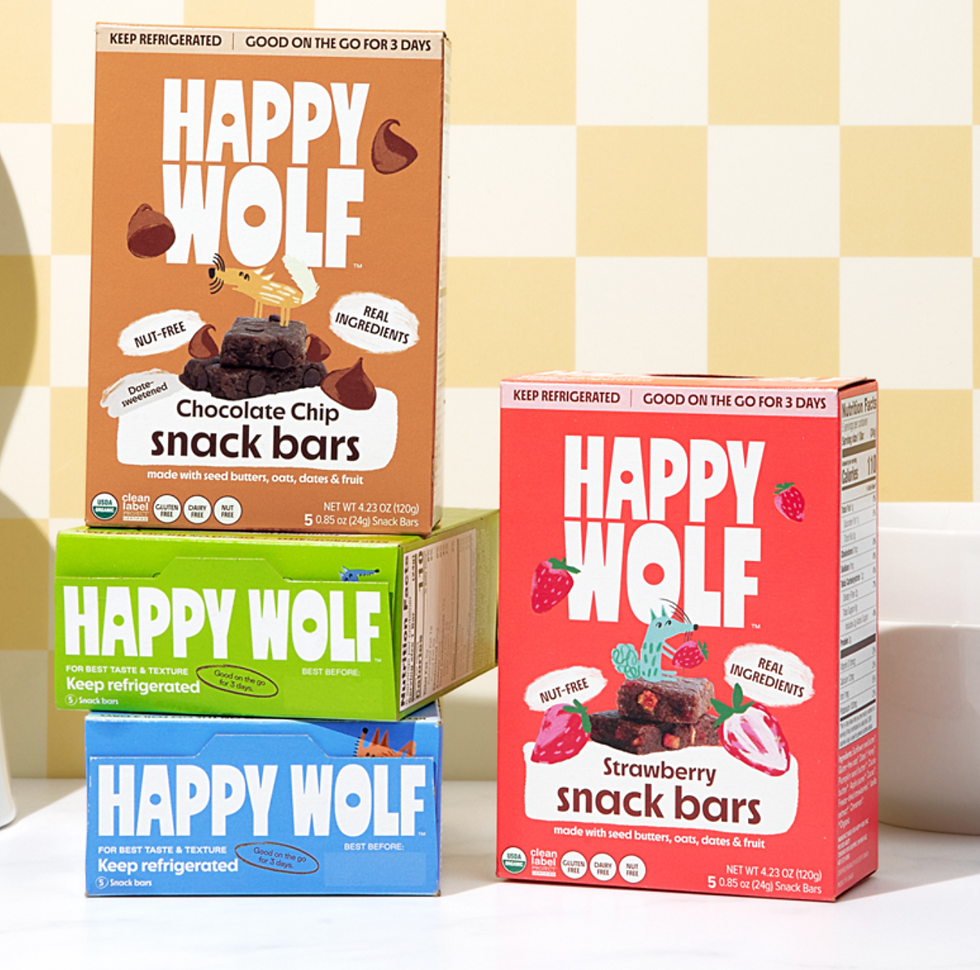
We sell on Amazon through Whole Foods Market, which is a bit different from the traditional Amazon setup. In our case, it works more like a grocery delivery platform. When someone orders Happy Wolf on Amazon, it’s not coming from an Amazon warehouse; it’s coming directly from a Whole Foods store. A shopper goes into the store, grabs our bars from the fridge, and delivers them to your door. There’s no middle step with a fulfillment center, which is especially important for us since our bars are refrigerated.
Being able to sell online/on Amazon this way has been a huge benefit for our small business! One of our biggest challenges in-store is that our bars live in the fridge (because we don’t use preservatives and our ingredients are so fresh), instead of in the regular snack aisle. Parents don’t always know to look there for kids snacks, so we can be a bit harder to find. On Amazon, we show up alongside other kids snack brands when people search, which makes discovery a lot easier. It also gives us more space to explain what makes us different like our high quality ingredients, why we’re refrigerated, etc., which you can’t always communicate quickly on a shelf.
On the flip side, while it’s great for discovery, it also means we’re right next to a lot of other amazing brands, so there’s definitely more competition. Shoppers have so many options, and to really stand out, brands often invest in sponsored placements or better positioning. For small businesses, that can get expensive pretty quickly, so it’s something we have to be mindful about.
Do you feel like selling on Amazon helps you as a small business, or is it just something you need to do because of the Amazon demand to keep up with bigger competition?
For us, it definitely helps! Discovery is one of the hardest parts of building a small brand. In physical stores, placement can vary a lot. Sometimes we’re in a kids fridge section and other times we’re next to adult bars.
On Amazon, if a parent searches “kids snacks” or “healthy snack bars,” we show up right away alongside bigger, more established brands. That really helps level the playing field and makes us easier to find. So it’s not just about keeping up with bigger brands. It genuinely helps more families discover us and makes us easier to shop for, especially for people who already shop for groceries online.
What does the process look like for a small business to sell on Amazon? When someone orders from you via Amazon what are the protocols and procedures that happen next in order for that customer to receive their product?
Yes, it is legit!!! Because we sell through Whole Foods Market on Amazon, it’s basically the same as grocery delivery. When you place an order, a shopper goes into a Whole Foods store, picks up our bars from the fridge, and delivers them to you.
So you’re getting the exact same product you’d get if you bought it in-store. Same freshness, same quality. It’s just more convenient because someone else is doing the shopping.
For us specifically, this setup works really well because our bars need to stay refrigerated. A more traditional Amazon model (where products sit in warehouses) wouldn’t be ideal for a product like ours.


Comments