Treating and Preventing Pneumonia
Updated: Feb 24
This guide was collaborated with pediatric Nurse Practitioner, Kirsten Blair - who formerly worked in PICU, and now works in peds ER.
⚠️ The following is NOT medical advice, and should not replace necessary medical care.
What Causes Pneumonia
Pneumonia happens when viruses or bacteria cause the air sacs in the lungs to fill with mucus instead of air.
When a virus or bacteria enter the lungs (think most respiratory illnesses), the body’s immune system rushes in to fight it. That immune response causes inflammation in order to bring extra blood flow and immune cells to the area where the germs are present which helps trap and clear viruses and bacteria from the lungs.
However, this inflammation makes the tiny blood vessels temporarily more open, which can allow mucus to spill into the air sacs. In most cases, the airways and air sacs are able to clear this mucus on their own through coughing and normal immune function so it doesn’t turn into pneumonia. Pneumonia happens when the infection reaches deeper into the lungs and the inflammation and fluid buildup becomes more than the lungs can clear.
Viral vs Bacterial
If pneumonia is viral, it can often be treated at home with supportive care. However, if it’s bacterial then your doctor is going to recommend antibiotics.
So how do you tell the difference?
A major red flag for bacterial pneumonia is the return of fever after being fever-free for 24+ hours. For example, a child has several days of flu or a virus, improves, then suddenly spikes high fevers again. This often signals a secondary bacterial infection.
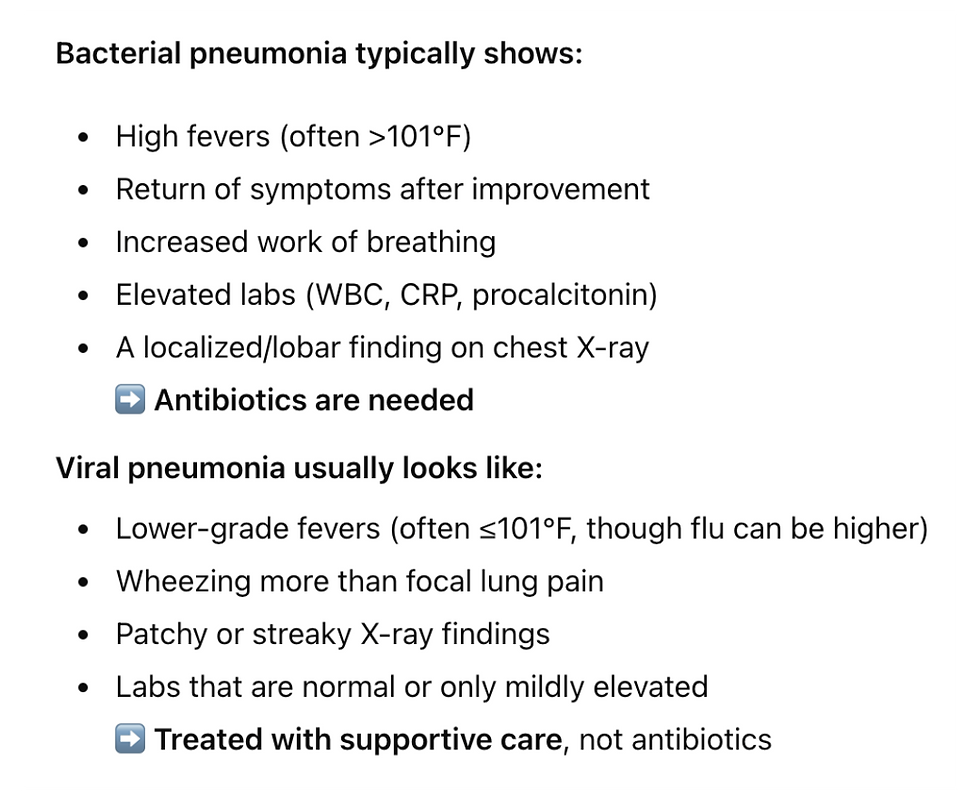
Children under 2 most often have viral pneumonia. As kids get older, bacterial and “atypical” pneumonias (like mycoplasma) become more common. Mycoplasma requires a different antibiotic, which is why proper testing matters.
If antibiotics are necessary: Learn how to mitigate antibiotic side effects here
When to Seek Out Medical Care
Fever returning after improvement
Fevers lasting 7+ days
Increased work of breathing
Loud wheezing without break
Blue tinted lips or extremities
Excessive drooling and inability to swallow
Retractions
Apnea (long pauses in breathing)
Low oxygen saturation
Blood-tinged sputum
Lethargy or worsening symptoms
Not able to cry or talk from difficulty breathing
When your mom gut tells you something is wrong
The key to pneumonia is PREVENTION
Anytime a child (or adult) is sick with a respiratory illness it’s important to focus on THINNING AND MOVING MUCUS!!!
do not suppress coughing!
nebulize saline
cool mist humidifiers
nose irrigation/suctioning
incentive spirometer
steam showers
staying well hydrated + added electrolytes
chest percussions
postural drainage
castor oil / onion chest packs
red light therapy
raw garlic
DO NOT SUPPRESS COUGHING!!!
I know it’s so tempting when you or your kid have a cough (especially those deep phlegmy coughs) to grab the cough medicine. But...
THAT COUGH IS THERE FOR A REASON!!!!
That annoying cough is a protective reflex to clear mucus and pathogens from the airways. If you suppress the cough then the mucus can thicken and pool in the lower airway instead of being expelled. That stagnant mucus can then create an environment where bacteria grows, increasing the risk of infections like pneumonia.
NEBULIZING SALINE
Nebulizing saline keeps the lungs moist and mucus thin, making it easier to clear before it settles deep in the lungs. The fine mist is breathed directly into the airways, where it loosens mucus, soothes irritated tissue, and helps coughing work more effectively, lowering the chance of germs lingering long enough to cause pneumonia. You can nebulize one whole tube of saline (typically takes 10-20 minutes) up to 5-6x a day. Safe for any age at the above %.
What saline should you use?
sterile, sodium chloride only
at 0.9% or 3%
COOL MIST HUMIDIFIER
Cool mist humidifiers add moisture to the air, helping keep airways from drying out. Moist air keeps mucus thinner and easier to cough up, so it’s less likely to settle deep in the lungs, while also soothing irritated tissue and supporting the lungs’ natural cleaning system.
While you’re at it, get yourself a hygrometer as well. They’re super cheap, and I don’t understand why they aren’t talked about more. Without one, there’s no way to gauge how humid or dry a room is. Too much humidity puts you at risk for mold, bacteria, and dust mites, You ideally want to keep the humidity between 40-60%.
NASAL IRRIGATION (for adults)
When the nose is congested, the mucus can drip back or be inhaled into the lower airways, especially in babies and young kids. Saline nasal rinses clear germs and mucus from the nose and upper airways before they can travel down into the lungs and settle into an infection.
It’s typically recommended to only nasal rinse up to 3 times a day. Exceeding this can potentially cause irritation, so it's best to start with once or twice a day and see how your body responds. Compliance will be best with older kids - adults
NASAL ASPIRATORS FOR BABIES
Nasal aspirators are designed primarily for babies because infants can’t blow their noses on their own. For older children who can usually blow their noses effectively, aspirators aren’t typically needed. For babies, put in a few drops or spray of saline, then suction. Or suction after a steam shower/nebulizer when mucus is already loose.
INCENTIVE SPIROMETER
An incentive spirometer is a small handheld breathing device that helps you take slow, deep breaths. It helps keep the lungs fully expanded, which can prevent mucus from settling and lower the risk of pneumonia. If someone already has pneumonia, it can support recovery by improving airflow and helping clear mucus from the lungs.
FLUTTER VALVE
Another option is a flutter valve, and can be used in conjunction with an incentive spirometer - but they are typically more expensive.
A flutter valve is a small breathing device you blow into that creates gentle vibrations in your airways. These vibrations help loosen mucus so it’s easier to cough out, which can help prevent pneumonia or support recovery when someone already has it by keeping the lungs clearer.
STEAM SHOWERS
Anyone can benefit from a steam shower, but these are especially beneficial for babies. Turn the shower on as hot as it will go, close the door, and sit in the steam. This will help soothe and loosen mucus. If nursing, this is a great time to breastfeed baby! Also a great time to do chest percussions.
Steam showers can be especially helpful for babies because they can’t blow their noses or cough forcefully yet, and depending on age they may fight you on the nebulizer. This is a super easy way to provide gentle moisture without requiring any effort from the baby. This is also a great time to follow up with nasal suctioning.
HYDRATION
Dehydration can lead to thicker and stickier mucus, so it’s important to maintain hydration when you’re sick so that you can support thin, moving mucus. Dehydration can also lead to weakened coughing, hindering that natural protective reflex.
Additionally, the lungs and airways are lined with cilia (small hair-like structures) that help sweep mucus up. In order for cilia to work effectively it needs needs hydrated tissues
You don’t need to force anything, but small sips of water + added electrolytes, electrolyte popsicles, or sipping on bone broth throughout the day can be a game changer.
CHEST PERCUSSIONS
Chest percussion is a technique safe for any age where you rhythmically tap the chest or back when a cupped hand to help loosen mucus in the lungs. This helps prevent the mucus from pooling in the airways, and is especially helpful to do after nebulizing.
POSTURAL DRAINAGE
This is an airway clearing technique that uses gravity to help drain mucus from the lungs. By positioning your body in specific ways, the mucus can move from the smaller airways into the larger ones where it’s easier to cough out.

Hold each position
5-10 minutes
1-2x/day as needed/tolerated
The goal is to target areas where mucus is most likely pooling. For general congestion 2-4 positions is usually enough. If coughing is productive in a certain position, that’s a good one to keep doing.
ONION CHEST POULTICE
Onion chest poultices are an old-school remedy that people have used for generations to help with coughs/congestion. The idea is that the natural compounds in onions, like sulfur and antioxidants, create a warming, soothing effect on the chest when applied as a poultice. This warmth can help loosen mucus in the airways and make breathing easier.
Chop and steam or saute an onion in a bit of water for 5 minutes. Pour into a cotton towel/cloth.
Fold up and apply to chest for 20 minutes
*make sure to let the poultice cool down enough so it’s still warm, but doesn’t burn the skin.
Can be done multiple times a day as needed. For any age as long as there’s compliance.
Other options easier for younger kids: ONIONS BY BED. Slice an onion and set it by the bed when they sleep. The vapor helps thin the mucus over night. ONIONS IN SOCKS. Chop up onion and put on bottom of feet, then cover with socks.
CASTOR OIL PACK
Castor oil packs may help promote circulation, support lymphatic drainage, and reduce inflammation in the chest. The warmth of the pack can also soothe the body, helping to relax tight tissues and make it easier for mucus to move and clear.
Saturate a cotton, wool, or flannel cloth with organic, cold-pressed castor oil
Apply to the chest
Cover with plastic wrap or a towel to hold the pack in place, or you can get a castor oil pack wrap
Place a heating pad or warm compress on top to boost absorption (optional but recommended)
Leave the pack on for an hour
When you’re done you can store the cloth in a sealed bag and reuse several times before replacing
RED LIGHT THERAPY
RLT has been shown to reduce lung inflammation. While pneumonia itself is caused by infection, excessive inflammation in the lungs can hinder normal airway clearance. There’s more research on the use of RLT in treating pneumonia, but it could in theory help in the prevention by reducing inflammation if paired with mucus thinning treatments.

Position your device a few inches from the chest and/or upper back. Since I have the LUMEBOX, I feel comfortable resting it directly on the back/chest due to the way they EMF test.
The LUMEBOX is the ONLY red light device I know of that measures EMF at 0cm, which is why I feel comfortable using it so close. code: THENATURALMINDEDMAMA will give you $260 off!!
Can be used every 6 hours.
RLT has not been extensively studied in children, so always check with your pediatrician. But, so far, the studies have not shown any concerns and is thought to be generally safe. We use on our kids.
How to Treat ACTIVE Cases of Pneumonia
The conventional treatment for pneumonia will depend on the cause (bacterial, viral, or fungal). For bacterial the first line of defense is antibiotics. For certain viral pneumonias the first line is antivirals, but many cases are just managed with supportive care unless they’re severe.
If you are symptomatic like blood in sputum, difficulty breathing, or low pulse ox, it’s advisable to take the antibiotic. If pneumonia is only just starting to develop, and is asymptotic, you can try everything we already covered in this guide first, as well as raw garlic.
RAW GARLIC
Unlike antibiotics that kill both good and bad bacteria, garlic supports the immune system and breaks down the protective biofilms around pathogens, helping the body fight infections naturally. It contains over 200 phytonutrients, including allicin, known for its strong antibacterial, antiviral, and antifungal effects.
HOW TO PREPARE
Finely chop, mince, or grate a clove of garlic and let it sit for 10–15 minutes so its beneficial compounds can fully form.
mix into a cup of water or juice and take it like a shot, or
if your stomach can’t handle that you can grate it into soup, or
grate it into olive oil and spoon into a baked potato, or
grate into olive oil or butter and spread onto sourdough
Do this 3x a day (so 3 cloves total) while symptoms are acute, and continue for about 7-10 days - the same you would for an antibiotic.
Do this 3x a day (so 3 cloves total) while symptoms are acute, and continue for about 7-10 days - the same you would for an antibiotic. If symptoms worsen, seek medical attention.



Comments